Space Travellers
2015
Projects
The Russian person has two romantic passions: it is love for long voyages, and a dream of flying. Both strivings fused to produce the idea of space exploration. Space travel to distant unknown worlds, the exploration of the Universe are at the same time a unique voyage in time, a breakthrough into future.
In the mentality of the Soviet person the pathos of scientific space exploration was mixed with the communist idea of building paradise on earth and/or on other planets. When Yuri Gagarin went to orbit for the first time in 1961, he was welcomed with universal jubilation and unprecedented enthusiasm. Space motifs and symbols appeared on posters and postcards, in the design of furniture and consumer products. It seemed that the world was on the verge of changing, and universal happiness was waiting for us behind the next corner.
SPACE TRAVELERS
interactive installation
Dedicated to Konstantin Tsiolkovsky
The Russian person has two romantic passions: it is love for long voyages, and a dream of flying. Both strivings fused to produce the idea of space exploration. Space travel to distant unknown worlds, the exploration of the Universe are at the same time a unique voyage in time, a breakthrough into future.
In the mentality of the Soviet person the pathos of scientific space exploration was mixed with the communist idea of building paradise on earth and/or on other planets. When Yuri Gagarin went to orbit for the first time in 1961, he was welcomed with universal jubilation and unprecedented enthusiasm. Space motifs and symbols appeared on posters and postcards, in the design of furniture and consumer products. It seemed that the world was on the verge of changing, and universal happiness was waiting for us behind the next corner.
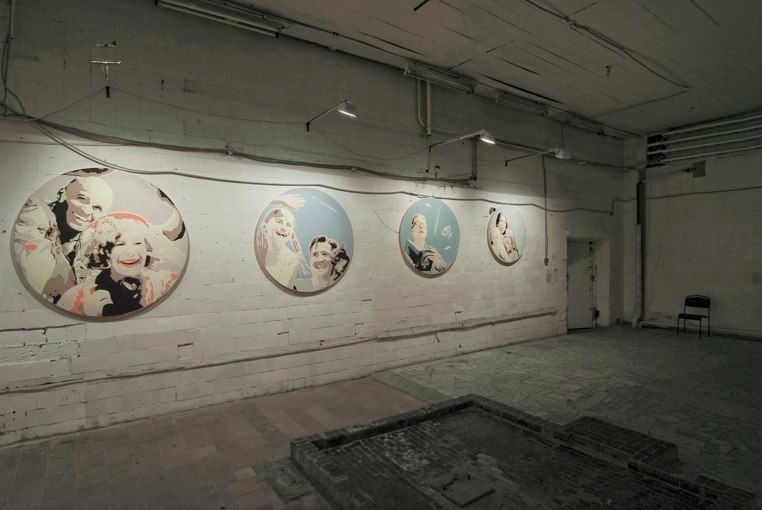
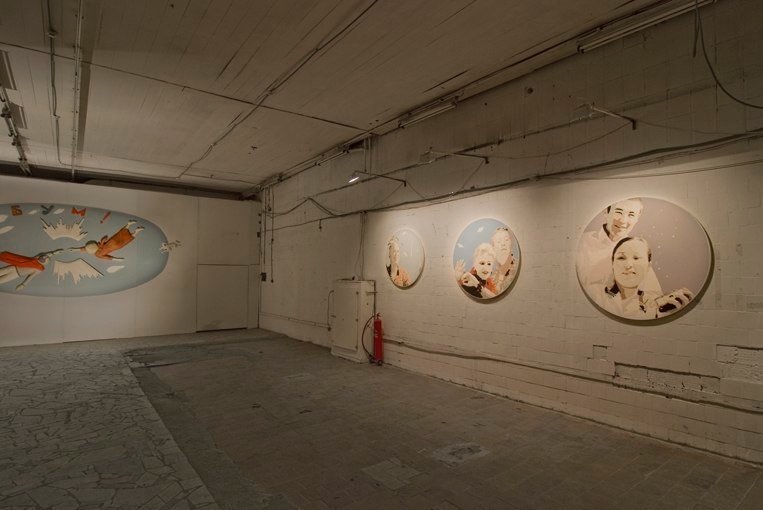
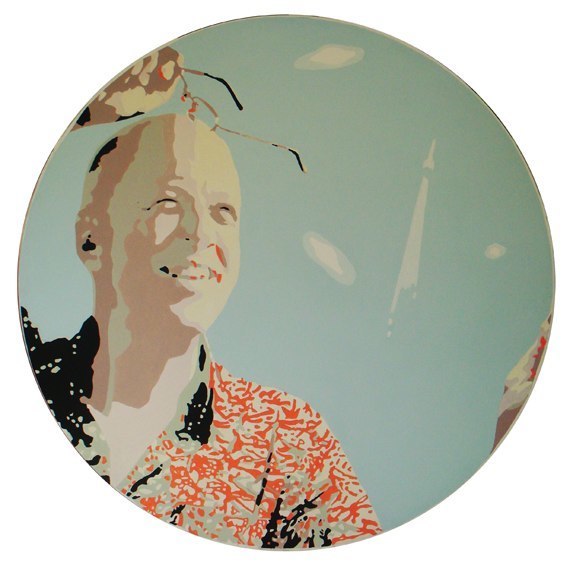
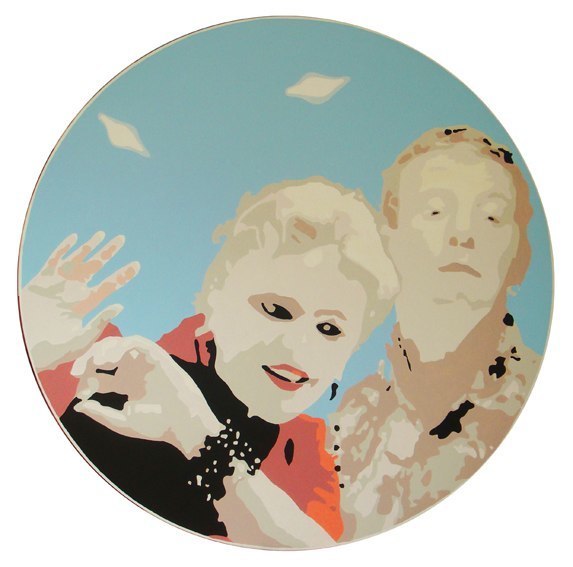
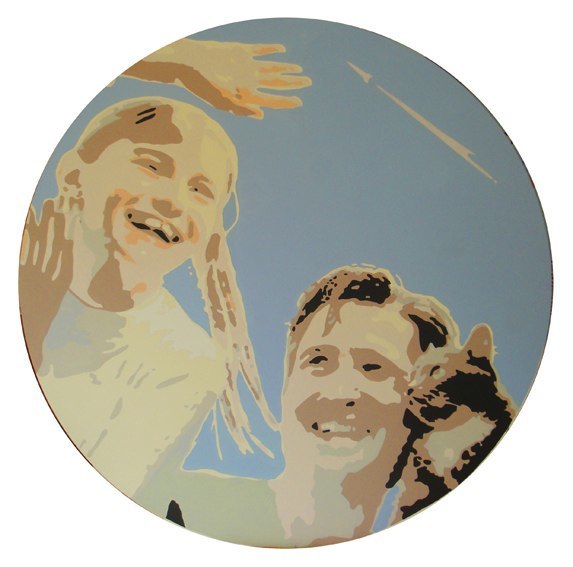
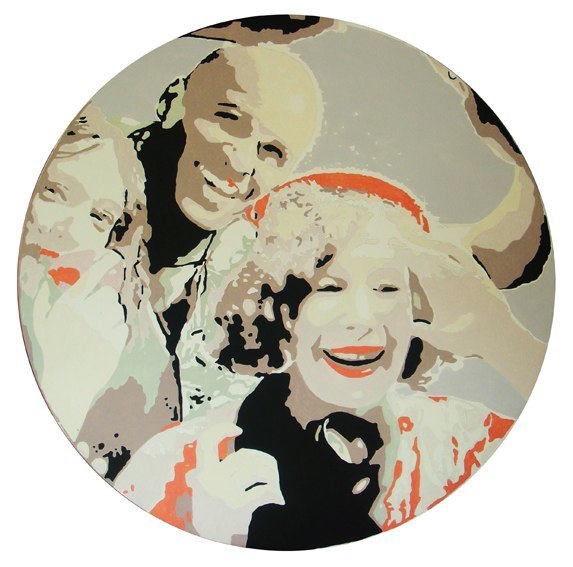
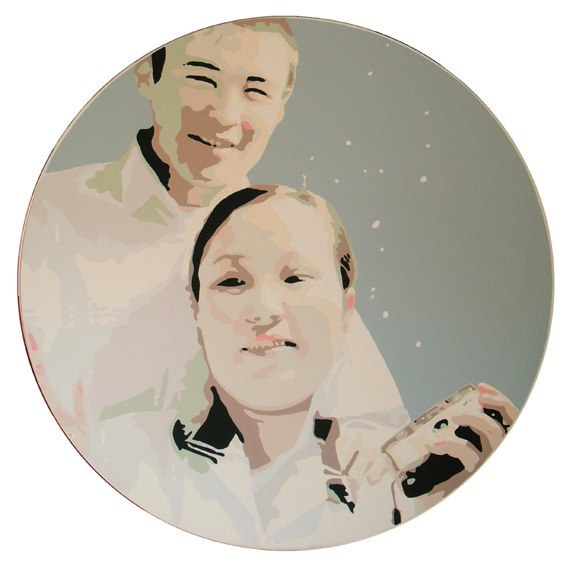
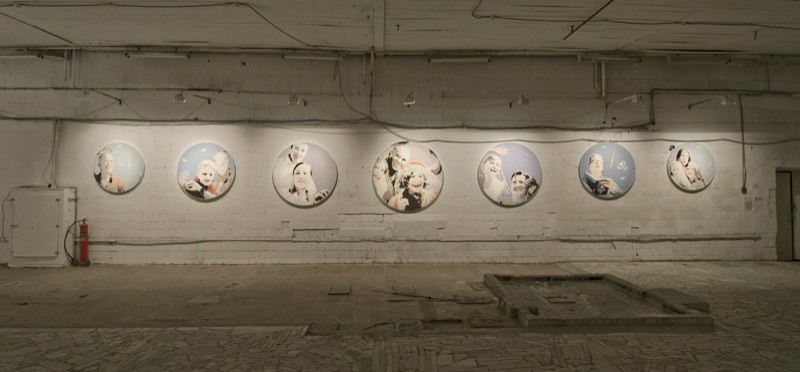
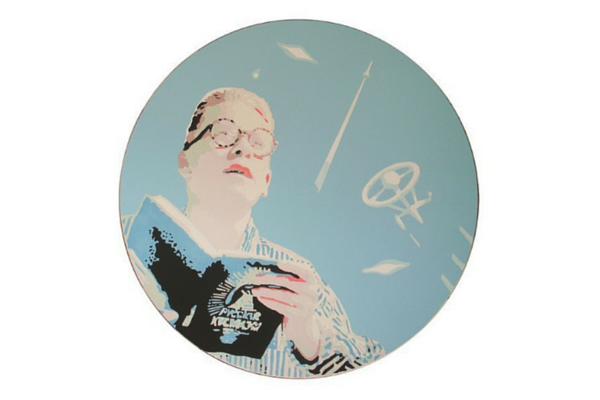
This project deals with space as a dream. Space travelers stare inquisitively into the shining starlit sky through illuminator windows. They seem to have stepped down from yellowed mid 20th century postcards.
Today everyone can pay a lot of money and be a space tourist, dreams are coming true. Future is here, although it is not as enticingly beautiful as it seemed to be when we looked at it from the past.
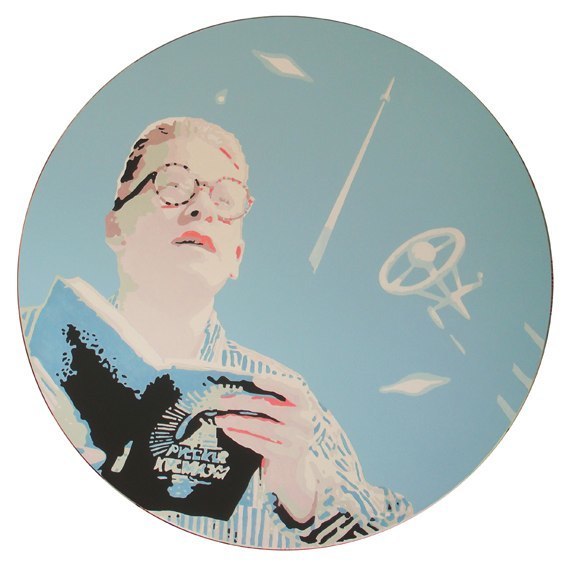
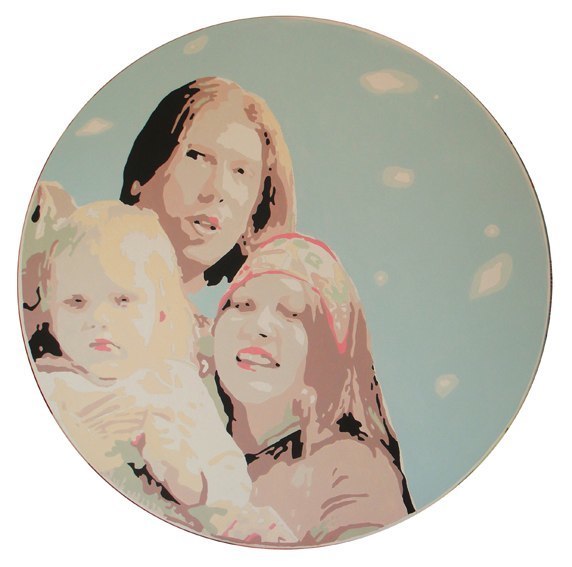
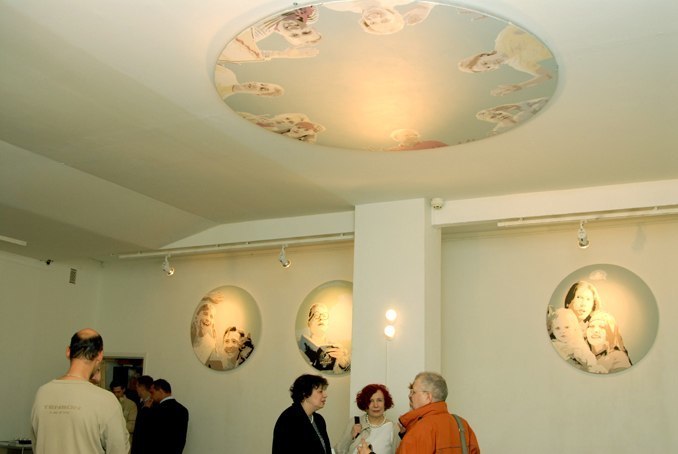
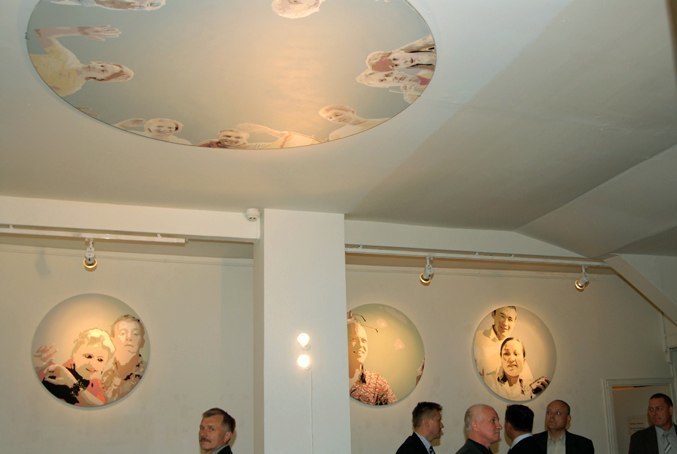
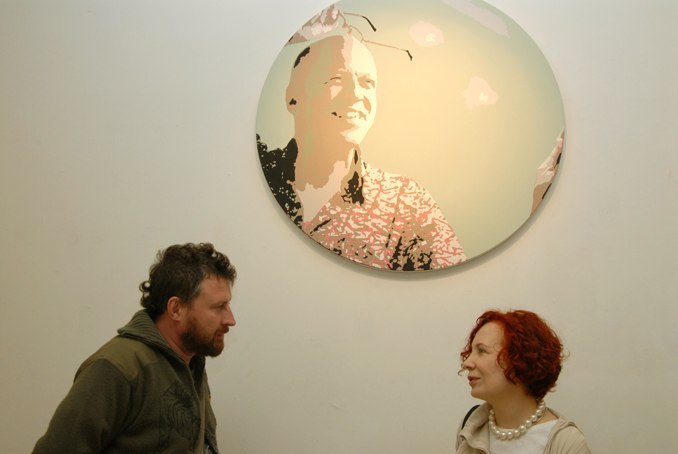
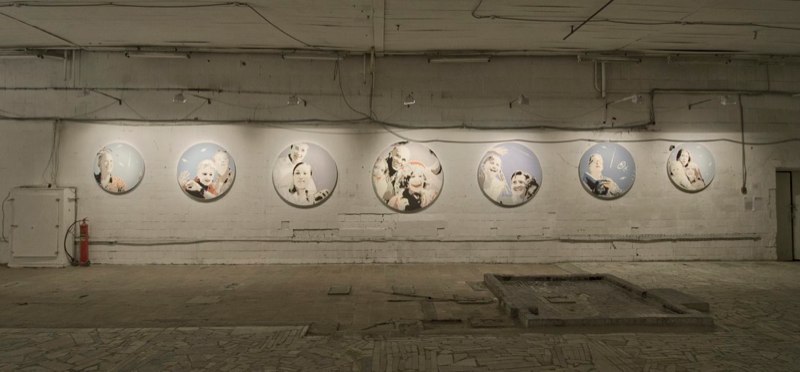
The installation comprises 7 round acrylic-on-canvass paintings. Being displayed in a horizontal row along a 12 meter wall, they represent a fragment of the hull of a huge spacecraft.
The Sky, Gagarin and a Girl
Tatiana Antoshina has won the reputation of a gender artist, but it is just a convenient explanation of non-male art that exists in the male culture, seeking love and freedom from gender issues. Her new project at the Guelman Gallery has nothing to do with it, so forget about gender.
The series of tondo pictures titled Moscow – Mars 2006. Space Travelers is an account of the worldwide euphoria surrounding first space flights. The series was inspired by Tatiana Antoshina’s first childhood memories, says the artist. She reached the sources of her memory and discovered excitement and jubilation in the creative prenatal.
The round shape is reminiscent of Italian Renaissance and Russian Avant-Garde, and the project seems to be stretched on the vital spokes which are not there, in fact. But what is there? Ideologically the project lies in the Utopian dimension of Russian Cosmism, while stylistically it refers to the aesthetics of Pop Art muted by the appeal to the Soviet as a phenomenon and diluted by the absence of Pop Art in the USSR. A spectacled student is reading the book titled Russian Cosmism, people are childishly joyful on April 12, 1961. Everything is sincere, honest, shared by all the people, with bright future shining ahead, and communism being the reality of tomorrow.
So, Gagarin is out there, it is the first Day of Cosmonautics (“we were not aware of it then”), the child is quite small, and the paintings seem to be her first memories. The aesthetic parameters of the project sprout from the self-awareness of a child, of being small, of excitedly looking up at the world and seeing the joyful sky with large laughing people around her. Rodchenko’s perspectives are associated with the way a child looks at the world, that is, upwards.
It is a project based on life, although a Pop Art project is usually preceded by some image appearing ahead, like a carrot in front of the donkey. Its aesthetics follows from the existential mechanism determined by the fact that the memory of a child was installed and run in the mentality of a grownup artist. Hence its perspective and the muted acidity: they just didn’t know other methods of printing in the USSR, their paint spread over gray-yellow pulpy paper.
The main visual and plastic motive of Tatiana Antoshina’s new project is in the idea of a Soviet Pop Art, of what it could look like if there was one at that time. It is in the idea of the style to express emotions of the child which are more appropriate for dancing and music, for spontaneous artistry, but Antoshina needs an organic painterly form, and the only solution she found was the aesthetics of non-existent Soviet Pop Art. The simulationist hypothesis of Tatiana Antoshina is totally convincing for the contemporary viewer. A nostalgic mix is easily read in it, the mix of hopes that seemed to be real and of life where total promise-making forced out sad everyday routine, the mix of optimism and memories of the naïve epoch of first space flights.
Emotionally, it forms an utterance of consoling purity and clarity with the message about Cosmos over our heads, about the fact that its coming is inevitable like the change of the perspective when the child grows up (children have no doubt that they will grow up, they just have to wait for a long time, they believe). The Soviet Pop Art and its bleak grayish-green-pink color scale suddenly proves to be congenial to space exploration and some total mania manifested in this mad, unrestrained optimism.
Space Travelers is not the first incursion into Pop Art for Tatiana Antoshina, one can remember Andy it’s Me, for instance, the self-portrait of the artist and a significant artwork facilitating the interpretation of her new project. This time Tatiana Antoshina appealed to the sources of her memory and found a Utopian mentality there, bright and whole. This mentality has nothing to do with the ideological anesthesia of critical perception for it has nothing in common either with the corn dreams of Khrushchev, or with the promise of communism for the next generation of children, or with naïve Soviet patriotism.
Russian Cosmism is the name of this grand Utopia. The ideas of Russian Cosmists, of Vernadsky, Fyodorov, Tsiolkovsky, are both phantasmagoric, and majestic, and obvious for the little girl who cannot fly just because she is not big enough for it. The language Tatiana Antoshina uses in her project is more adequate and accurate in the expression of the Utopia of Russian Cosmism than the ponderous aesthetical language of the epoch of first space flights. It is a Utopian language, that is, literally, the language of the place that does not exist in this world, if you go back to the etymology of “Utopia”.
Tatiana Antoshina produced a Utopian project. It is something of a gift she gave to her own childhood with its excitement and jubilation.
Alexander Yevangeli
Moscow – Mars 2006